
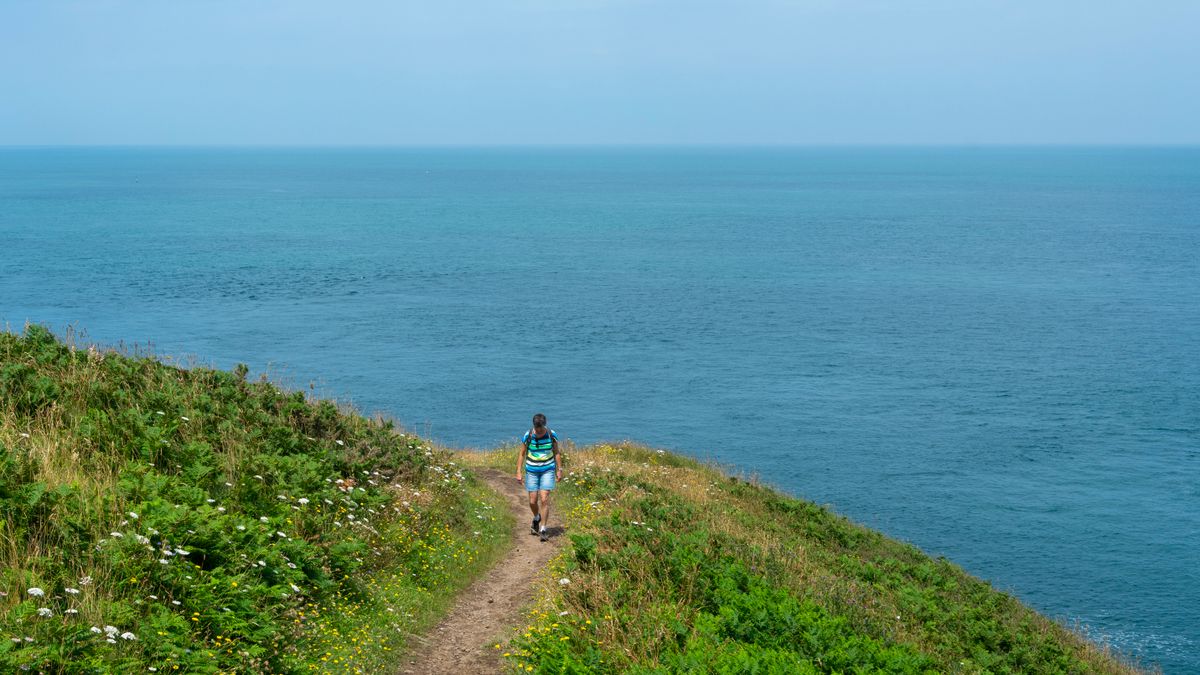
There is no getting away from it: the Furness Peninsula is not flat. Whether you are heading up to Hawcoat, tackling the rise out of Barrow Park or plodding along the coast road towards Rampside, a hill will find you. For a new runner, that first proper climb can feel less like exercise and more like a panic. The good news is that gasping on a slope is rarely a sign that you are unfit. More often, it is a sign that your breathing has lost its rhythm while your legs are still being asked to work hard.
The fix is not to breathe harder. It is to breathe slower, step shorter and give yourself permission to walk. Here is how to put that into practice on the hills around Barrow and the wider peninsula.
On the flat, your breathing settles into a quiet rhythm you barely notice. As soon as the ground tilts upwards, your muscles demand more oxygen, your stride shortens whether you like it or not, and your posture changes. If you keep pushing at flat-ground pace, the demand quickly outruns the supply and your breathing becomes fast and shallow. That is the gasp you hear in your own ears on the climb up to Furness Abbey.
The simplest check is the talk test. On an easy run you should be able to speak a short sentence without gulping air between words. If you cannot, you are working too hard for the pace you are trying to hold. On a hill, the answer is almost always to slow down rather than to force more air in.
New breathing habits are much easier to learn when you are not also fighting gravity. Spend five minutes a few evenings a week lying down or sitting tall with one hand on your ribs and the other on your chest. Breathe in slowly so the lower hand moves and the upper hand stays fairly still. That is diaphragmatic breathing, and it moves far more air than the shallow chest breathing we default to when we are anxious or pushing hard.
Then take it out on an easy flat route, such as a lap of Barrow Park or the path along Walney's seafront, and try to hold on to that low, relaxed breath for the whole run.
Once the basic breath feels natural, tie it to your footfall. On gentle ground, two steps in and two steps out works well for most new runners. As the slope steepens, shift to two steps in and three out. That longer exhale is the trick that stops the breath turning into a pant, because it gives your body time to clear carbon dioxide rather than constantly topping up.
On a genuinely steep pull, such as the climb onto Birkrigg Common, stop counting and simply let the breath do what it needs. Counting should relax you, not turn into another target to miss.
Breathing is only half the story. How you run the hill changes how much air you need in the first place.
This is the single most useful habit a new hill runner can build. Do not wait until you are gasping. The moment you feel your breathing going ragged and your form falling apart, take a brisk 30 to 45 second walk. Breathe deeply, stand tall, then start running again. You will get to the top faster overall, recover more quickly and finish the session feeling like a runner rather than a survivor.
A simple structure works well on local climbs: run for 60 seconds, walk for 30, and repeat until the top. On gentler slopes, such as the rise from Roose towards Biggar Bank, you will soon find you need fewer breaks. Keep the walk brisk, not a stroll, and keep it short. As your fitness grows, the walk breaks will quietly disappear on their own.
One short hill session a week is plenty to begin with. Twenty to thirty minutes on the same climb lets you measure progress in a way that matters: how quickly your breathing settles at the top, not how fast you got there. Warm up properly on the flat, and jog or walk gently back down between efforts.
It also helps to run hills with other people. The beginner-friendly groups that meet on weekday evenings across Barrow, Dalton and Ulverston are full of runners who remember exactly how it felt to be gasping on their first climb, and the chat on the way up is a natural pace limiter. If the wind is coming in off the Irish Sea, dress a layer lighter than you think you need once you are climbing, and pull a buff over your mouth on cold mornings so the air is warmer when it reaches your lungs.
Start with the gentlest slope you can find, keep your steps small, keep your exhale long, and walk before you have to. The hills around Furness will still be there next month, and by then they will feel considerably shorter.

Hi, my name is Anthony kuber. I am artist and fashion designer.
I love to travel and writing blogging.
Your email address will not be published. Required fields are marked *
Software Developer & Writer
Hey, I'm Diva, a developer and writer blending code and creativity. I'm driven by a deep curiosity and a relentless pursuit of excellence. Join me as I craft digital solutions and captivating stories.


